Thursday, November 1, 2012

NaNoWriMo #2 Getting my Groove Back


Weber State's Nontraditional Student
Literary Journal T-shirt design for the year.
Life has been crazy the past few months.  I was on the right track.  Working with a writing group weekly, a president for chapter of a professional writing organization, and a managing editor for a student literary journal are all things that should have meant I was doing something right.  Right?  I have what (I think) most writers would dream of if they were trying to build their resume.  Yet over the past few months I’ve lacked something: Perseverance.
I'm the President of the Wasatch Writer's Chapter now.


I stopped writing with my writing group and blogging weekly a few months back.  Why? I could give you all sorts of reasons.  I got busy with school.  I worked on my addiction recovery.  Our house flooded.  But none of them strike at the real heart of what is going on with me: “I’m not making writing a priority.”  I haven’t blogged, I haven’t worked on anything new, nor I haven’t been to my writing group, because I haven’t made them priorities anymore.  And if I want to be a professional one day, I need to incorporate writing into my daily life in a healthy way.

So after two attempts at Camp NaNoWriMo this year with spectacular failures, I’m signed up for the Official NaNoWriMo event this year again.  I did it because I need a community to help me make my writing a priority again.

A twitter writing community.
You might wonder why a person who is super busy with school, married life, work, a literary journal and an organization to manage would want more on their plate.  Quite simply, if I’m not writing the other writing activities in my life have no meaning. How can I inspire anyone to keep writing if I’m not doing it? How does my urging people to submit to my literary journal have integrity if I’m not writing? How can anyone in a writing group with me feel my criticism is valid if I’m not in the trenches with them?  And most of all how can I look myself in the mirror and say I’m a writer?  Bottom line, I can’t.  So I’m going back to where I began last year and finding the strength I learned there to continue this journey.

Another Online writing community.
A few nights ago I had plans of using the novel I wrote last year and finishing it off for my NaNo piece.  It is even on the website still.  But last night something clicked, if I want to really be in the fray with everyone I need to be doing something new.  My words need to suck.  My head has to be in the clouds.  And it is hard to get to that place when what you are really doing is editing an older story.  So I decided to do a NaNo of short fiction.  I figure I’ll get through roughly six to seven short stories by the time all is said and done.

This also supports me for the most important goal of my young writing career at this point.  Preparing to go to Clarion West.  At the end of the month I’ll be taking one of the pieces that I have done and polishing it up to send in to Clarion West to see if they will accept me as one of the writers in their 2013 workshop.  

Read this book!
Clarion West is a science fiction and fantasy writers workshop that is focused on helping writers belonging to minorities (women and ethnic) learn better what it takes to be a writer.  I learned about them a few years ago in Orson Scott Card’s “How to Write Science Fiction and Fantasy.”

I will graduate in a year, and at that point I'll need to be working full time and doing writing on the side until I publish.  If I wait longer to attempt to go to Clarion, I'll be professional and Clarion wants us as writers before they we are seasoned professionals.  So I am going to take the plunge and learn from the masters this summer.

Of course this is all based upon whether or not my stories are good enough.  This is where you the few who are still paying attention to this blog come in.  I need people to help me hone my work.  If you would be willing to help me with it I would appreciate it if you would leave me a comment below letting me know you would like to help me critic some of the stories I come up with.  Usually I wouldn’t ask for help, but there are eighteen slots for Clarion each year.  And I need all the help I can get to figure out what I can do to make my stories the best I can.

As always thanks for reading.  And I’ll be back on Monday to tell you how I’m doing for NaNoWriMo and fill you in on where I am with the goals I have established thus far.  This is the OG, Peace Peoples!

Wednesday, July 18, 2012

The Writer's Lifestyle & the Laws of the Harvest

I remember years ago when I read Stephen King's On Writing the sentence I hated most in that book: "You must not come to the blank page lightly."  I realize now that he wasn't accusing me of that, but telling me what I shouldn't do, but for some reason when I read it I know I felt, "You haven't brought your best work to the blank page yet.  You're still just doing it lightly.  Stop and start over."  And it was that which made me so angry that I devoured every last word of the rest of his book.  It was a very good book, but I still didn't understand what coming to the blank page lightly meant until recently.

As I've been working on "Crimes of the Umbramancer," I realize there are times that I have come to it very lightly.  I've come to the blank page writing out of obligation.  I've come to the blank page writing out of need.  I've come to the blank page writing out of fear.  And you may sit there and say that that's not coming to the blank page lightly, but I would have to disagree, because I know that when obligation, need, or fear are the primary motivators of my writing that it sowing seeds for later writing.  And when the seeds sown are seeds that eventually drive people from writing, the writing is light.  It didn't lay seeds that could reach into the soil of life and build a lifestyle.  It didn't lay seeds that could reach the depths of the concrete jungle of publishing and build me a career.  It didn't lay seeds that could touch the hearts of an audience that would care about what I wrote.  I approached the blank page lightly.
By John W. Lawrence

During NaNoWriMo when I originally wrote the first draft, I never sat down one day and came to it lightly.  Instead I came with hope, love, and enjoyment of what I was doing.  I started out blogging that same way.  But it has been hard and I'm still learning lessons about what it means to come to things "lightly."  Recently I came across a quote that really got me thinking though, from a book called The Seven Laws of the Harvest.  I would like to share those laws with you in hopes that they help you as much as they have helped me since I ran across them.
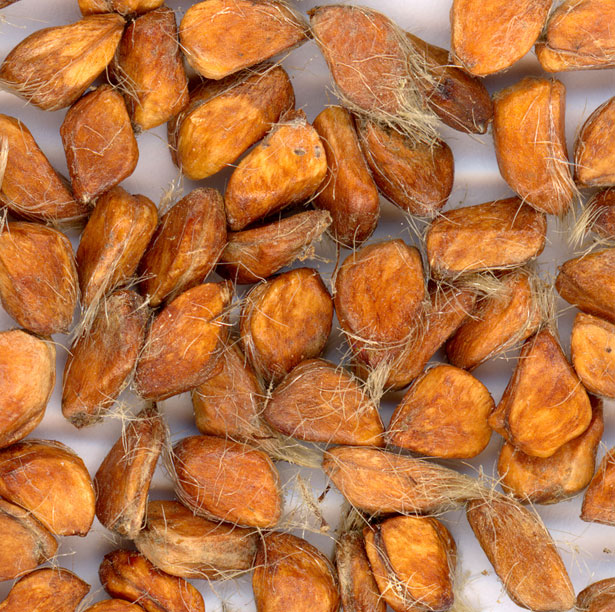
Wild Rose Seeds
Let's start with the first law: We reap only what has been sown.  What does this mean for us as writers?  It has a lot to do with the emotional sets we choose when we go out to do any writing project. If you write out of obligation, what you are sowing is that you want to write out of obligation.  That can create positive pressure to write, but what if it doesn't?  What if you find yourself unable to write because you are obligated to do it?  I think this often happens to us young writers, because we want certain things to happen on a specific timeline.  We obligate ourselves to write instead of enjoy our writing.  We stop enjoying the process, the adventure, and the story and get caught up in all the details such as "I have to take that adverb out", "That isn't going to be realistic", or my personal favorite "This isn't good.  I should start over."  Stop sowing obligation and start sowing joy again.  We write because we love it.  Some of us will be able to make a living off of it.  Others of us will entertain our children with our stories.  All of us should be invested in making a life out of it.  And life is meant to be enjoyed.

White Wild Roses
The Second Law: We reap in same kind as we sow.  If you want wild roses you plant a wild rose seed, not a rose seed.  If you want a thoughtful research paper for a paper on genetics you do good thoughtful research on genetics, not research on how many hours it took you to get to the end of Halo Reach.  If you want to have a book loved and read by many, you spend the hours writing that book.  What you sow will be the same kind when you go to reap.  And you cannot reap the full benefits of something you did not sow.  When you cook the microwave dinner you don't reap the benefit of the feeling of having cooked a meal for your family, you reap the feeling of convenience.  It has been my experience that we sow what is easy and complain during the reaping season about not getting the rewards of sowing something hard.  If you really want something beautiful, you're going to have give hard work to make certain that it comes to pass.

The Third Law: We reap in a different season than we sow.  So many things in life come so easily. The internet equals instant knowledge.  Our microwaves equal instant food.  Our televisions equal instant entertainment.  But we so frequently forget that in those endeavors we are reaping the reward of what someone else sowed.  And when we buy into that thinking, we forget that to really get the best things in life we have to give them time, nurturing, love, and work to bring them to life.  Writing a good novel is like raising a child.  We sow the seeds and a child is born.  Then it takes eighteen to twenty years of work to make certain that child becomes a good person.  The season of sowing is eighteen years away from when you reap the full benefits.  A good novel requires the same kind of dedication and love.  (Just hopefully not eighteen or twenty years worth.)

The Fourth Law: We reap more than we sow.  Think of a single seed of corn seed.  If you plant this you will get one ear of corn that has at least 600 kernels.  So the yield you get for each seed of corn is at least six hundred fold.  An acre at 84 rows of corn will plant at least 22,000 stalks of corn.  And if you consider each stalk to only give you one ear of corn that becomes 13,200,000 kernels of corn.  So the return on what is sowed is huge.  It gives you good reason to practice.  And make sure you do all you can to take care of what you have sown.  Because when the time for harvest comes, you are going to be pulling in a lot more than what you put into it.  And that is a beautiful thing.

The Fifth Law: We reap in proportion to what we sow.  Back to the corn analogy, if you only sow a half acre of corn at 11,000 stalks and only get 6,600,000 kernels you got what you deserved.  You can only reap what you actually sow.  A master pianist didn't get that way because they played piano once when they were a child.  No, they had to practice and work at that talent until they nurtured it into a gift that could touch lives and enable them to find an audience to listen to their music.  Writing is the same way.  We reap in proportion to what we sow.  Our seeds are different so some of us may reap the benefits of writing poetry for our families.  Others of us may make careers out of our writing.  What makes all the difference in the world is the fact that we sow enough seeds to get the return we are looking for.

The Sixth Law: >We reap the full harvest of the good only if we persevere; the evil comes to harvest on its own.   Often times when we sow our seeds, we will discover that weeds come in and try to grow along with our harvest.  Even though this can seem bad, we can't stop this process.  The good and bad seeds both desire the same ground to use for their growth.  What we can control is where we nourish and strengthen.  If we spend our time nourishing and strengthening our good seeds until the time comes to harvest we will be able to take the good part and destroy the chaff.  As writers this means we have to invest in our story until we finish it.  If we spend all our time revising, editing, and in other words not getting to the end of our story we will lose it.  However if we strengthen it along the way and learn what we can from the process when we get to the end we will be able to remove all the ugliness we are able at the end.


The Seventh Law: We cannot do anything about last years harvest, but we can about this years.  So you failed last year to get your harvest to come to pass?  Or you didn't get the book written?  Well guess what?  That's okay.  There is this year.  Don't make the same mistakes this year that you made last year.  That is one of the best parts about this entire process.  You learn from it the entire time.  If you learn you reap the benefits of greater understanding of yourself and how you function.  You know what you need to do to motivate yourself to write.  (Like I motivate myself with saying I can have an orange soda each time I write.)  The past is there to learn from, the future is before us to prepare for, and today is for us to act.  Make this year the best you can make it.  Plant hope to become a better writer.  Plant love for storytelling.  Plant an enjoyment of sharing your heart with others.  And as you plant those things this years harvest will be different than last years.

To date this has been the best year I've ever had writing.  And I've loved the majority of it.  I just had to learn a lesson about what it means to come to the blank page with intent to make a story that I love, instead of writing out of obligation to anyone or anything.  Writing is my lifestyle.  I am getting better at living this lifestyle all the time.  And I know that one day, that investment is going to get me what I really want.  An ability to touch the hearts of people with the words I write.

This is two bits.
That's my two bits for this week.  I'd love to hear about your two bits.  Tell me about the kinds of harvests you have had writing.  Good ones, bad, or somewhere in the middle?  Hope everyone has a wonderful week!  I'll catch ya later!  Peace.


Wednesday, July 11, 2012

The Rain: A source of ebb and flow.

Ever felt like the heavens just opened up and poured out all the pain, worry, and negativity of years upon you? I think that's where I've found myself for the past month. And it has really bothered me. I had wonderful plans for doing Camp NaNoWriMo and JuNoWriMo, work with my writing group, and getting through some particularly hard scenes in my fiction and everything concerning my writing came to a screeching halt as this hurricane began in my life.

I usually write to be able to get through the storms anymore and when the hurricane came I found myself completely blocked. I couldn't blog, when I tried to work on my story it all felt wrong, and piece after piece of my life just fell out of place. And you know what, today a piece just fell that I didn't think I could take. And after a difficult conversation with someone yesterday, the storm should have washed me away. But it was that piece that is washing away in the grand scheme of things that brought me here today to write. Because this is the first time since the hurricane began that I've seen a better tomorrow. Perhaps that means I'm in the eye of the storm. If so that means I need to get myself prepared for the other side, because I'm not about to let myself fall apart for a hurricane that I'm going to survive.

That's why I'm writing today, and I hope that my blocked period of writing is over. But as I think about all this it got me to thinking about why people have writers block and what keeps them from putting words down on the page. In my opinion writers block is a real thing, but it has a lot less to do with our actual ability to write words and a lot more to do with the emotional state that we reside in.

For example I remember hearing on a Writing Excuses Episode (Season 1, episode 16) once that Howard Taylor once had a block when he was writing Schlock Mercenary strip. He was trying to make it work, but he found himself needing to know the mathematics to how fast the space station was spinning. He did that and suddenly he was able to write again. As I think about that it wasn't an inability to write, it was the fact that emotionally he couldn't connect with flow any longer and that kept him from writing.

Ebb and flow are terms that we typically use when we talk about water, but creativity works in a very similar way. Sometimes the creativity is in high gear and beauty seems to come effortlessly, this state is known as flow. We can create because we have done the work, both mentally and emotionally to be able to flow. However there is also the state of ebb. Ebb is when we are preparing for our work, doing our prewriting, researching, and even when we are exercising.  These are times when we are preparing for flow once again. If we stayed in a constant state of flow our work would actually over time get worse because we wouldn't have anything left after a while to give. Our energy would be exhausted, our knowledge would fail, and we wouldn't have any experiences left to draw upon. Howard's experience was one of knowledge, and because he is a professional he realized what was going on, allowed himself the time to be in ebb and once he had the knowledge that he needed he shifted back into flow.

Buy this book.
Steven King describes a similar experience in his book "On Writing." He talks about "The Stand" and how when he was writing it he had a point where he didn't know what was going to happen next. It was the first time he had ever experienced writers block and he had no idea how to deal with it. After a month or so the answer came to him as to what he needed to do and it drove him through the rest of the novel. It was something that he needed to learn about the process of writing that enabled him to make that book so much better. It was simply that everything had grown quiet in his story and he needed to change up things. He changed them with a bomb. Changing the direction of the story was exactly what he needed to do to produce flow.

An effective means of using ebb.

But when you start to think of writers block as ebb it changes things for you. The first thing it changes is that you cannot think of writers block as a negative any longer. You must think of it as what it really is. It is your soul crying at you that you need something else at the moment. Usually it is one of two things. One: You don't want to be writing right now.  And if you don't want to write right now, that's okay. Go do something else. Exercise, read, or do some research. Do something that helps you get in the mood to write. Or it could be number two: You need to pay attention to what you need right now to be able to write. Sometimes you need to do some research. &Sometimes you need to put your life in order. Sometimes you just need time away from your story. When you are experienced you know exactly what you need, but I am still building my library of experiences in writing and that means sometimes I don't know what I need. But it does mean I need to be patient with myself and allow myself the time to be away.

Some professionals tell you that you need to write through block. And I agree with that.  Just because I haven't been able to make much progress this past month, I've still been writing. Just nothing that I feel I can share with anyone, because I have zero confidence in it. You must be willing to shut the door on your writing sometimes to be able to find out what you need to find your flow again.

For me I have had the hurricane interrupt my life with pain, fear, and worry. It got me to think to ask people about the things I didn't know. It got me to consider whether or not I'm a professional or not. It got me to look in the mirror and make a choice.  I choose to write.  Not because I can't do anything else. I could become a social worker, or a teacher, or even a politician, but none of those even come close to the joy I get out of writing.

So in your journey to becoming a professional, remember that you are going to have ebb and flow. Anticipate it. And find your rhythm, because Writers Block ends the day you understand your writing rhythms. And you can experience regular flow.

Sorry I left for so long. It won't happen again.  I'll be back with you on next Monday with another post. I'm giving myself time to get in rhythm again.  Because I'm going to be patient with myself and give you my best. Thanks for sticking around during my drought. Catch ya'll soon.


This is the OG signing out.  Peace.

Saturday, June 2, 2012

War Post: 2nd June Late Mashup & Goals


Good Morning folks!  So this Saturday Morning I am finally getting to my Mashup for the week.  As I was getting ready for it earlier this week I had a lot of things that took place that kept me from getting to it any earlier.  Today is the second day of Camp NaNoWriMo & JuNoWriMo and thus far I'm keeping up with my goals for each day.  Todays Mashup is focused on things that might help folks to get through the next month of writing.  The community of writers is our greatest strength and we must help one another if we expect to make it.  Here's my contribution today.

David Powers King has a guest blogger by the name of Shallee McArthur this week and she's wonderful. Read on at: "Shallee McArthur: The Key to Writing a Deeper Book - Get Outside Yourself!"

Rebecca Hoffman also has a guest blogger who shares about her own writing experiences in: "Guest Post by Cynthia Ravinski."

Ellen Oh, an up and coming YA diversity author, interviews another author about why they write diverse fiction in: "What Diversity Means to Me - Featuring Zoe Marriott."

Angela Ackerman has a guest blogger  giving away a copy of their book Keep Calm and Query On.  Read on and register for a chance to win at: "Keep Calm And Query On + Giveaway!"

Anthony Dutson gives some solid advice about how to set up realistic goals in: "Reevaluating Your Goals."

Adam Gaylord talks about something that is worth thinking about, if you write sex scenes, in: "Who's Up For Some Bad Sex?"

Mary Ann, of the Prosers, shares a compelling blog on why flaws are necessary in characters in: "Even the Noblest Characters Need Flaws."

Jeff Hargett weighs in on the ages long battle of opinion between authors about: "Prologues."

Callie Leuck brings in the big guns with Jamie Gibbs to bring a bit more culture to her blog in: "Guest Post: Adding Culture To Your Fantasy World."

Morgan Shamy, The Redhead, helps us to see the difference between reality and fantasy in: "The Writer Community: Real or Fake?."

Donna K. Weaver has a lightbulb moment concerning how to do Show versus Tell in: "My Epiphany."

K.M. Weiland shares some great time saving resources in: "Resource Roundup: 5 Time Savers for Writers."

Nathan Bradford tells us all about the the war between Traditional and Self Publishing in: "Traditional vs. Self-publishing is a False Dichotomy."

And I'm sorry, I had to post this.  This is from Heidy Murphy sharing stories from soldiers for Memorial Day (And in my opinion, the most important blog of all of these to read).  Please read: "I Remember You."

And now for some amazing music.  If you have heard "Sexy and you Know It" and hated it, give this version a try.  It is amazing!


I told you it was amazing!


The thought that occurred to me is that I should make myself accountable for reaching my goals.  But I also realized that I need to do my goal keeping here in a method by which simplify what I need to do for goals.  In my group therapy we have the meat and potatoes of the program which are called daily's.   And I wanted a way to make certain I keep better track of my dailies.  I do well with writing, and sometimes exercise, but I struggle on day to day goal keeping.  So here are my daily's for the upcoming week.

Daily #1: Eat Three Times Daily.  
This looks like an easy goal, but I actually struggle with this, because when I get caught up in activities, I tend to forget to eat.  And myriads of problems actually begin when I forget to eat, so I'm just focusing on eating at a regular frequency through the day.

Daily #2: Sleep Eight Hours each night.
I am trying to keep this goal more and more often (except this week has just been terrible for this).  I know that when I get less than eight, everything is impacted negatively for the next day.  I feel sluggish,  achy, and dull and I am less likely to get proper rest the following night.

Daily #3: Write Frequently.
This one I'm not aiming for daily on.  I need time to recharge my writing batteries so I plan on doing this one off and on (Even during Camp NaNoWriMo and JuNoWriMo).  I am a social writer so stuff like write ins and writing sprints help me a great deal.  Writing is one of the activities that grounds me and helps me to cope especially when I'm feeling angry or down.

Daily #4: Spiritual Time Daily.
Once upon a time I was capable of reading from the scriptures daily and drinking from that fountain was enough to satisfy me.  I've grown a little since then and I guess I need more sources of spiritual food to help sustain me.  I decided to not make this goal about reading, and more about spending time daily thinking about things of a spiritual nature.  A few days this week I listened to gospel music, and today I plan on reading.  I don't know all of what I'll include in this, but I got to change this one up.

Daily #5: Helping out around the House.
This is another mundane thing that keeps me sane.  I've started doing the dishes regularly and cleaning up around the house.  Funny thing is that as I do this my wife has become more supportive of my writing, and has started to enjoy more of the housework she does.  It makes all the difference to my healthy state of mind, and it's effects on my wife make this one that I need to keep around to help me.

Daily #6: Frequent Exercise.
I've been getting out around three to five times a week for a while now.  I thought the best way to kick this up a notch would be to attempt to find a set time each weekday for exercise.  And I hope to drag my son with me.  He needs the help just as much as I do.

Daily #7: Reading Daily.
This one has been struggling for months.  I just haven't been reading much of late.  I have several books that I've started, but none that I've finished for a while now.  So I'm going to set a half hour for reading each day.  I figure if nothing else it will put me in a state of mind where I have more ideas.

The list right now is incomplete.  I'm still trying to find out what things balance me and enable me to get through the more difficult times.  But I'm certain that if I keep at it I'll find my way.  This month, I'm focused a lot on the writing.  Because I am out to win Camp NaNoWriMo and JuNoWriMo.  I three to four hours set aside most days to get some quality writing done and my family knows during that time I'll be unavailable.  (And I won't waste it just to sit online and do nothing.)

That's all for this week folks.  I'll catch you again on Monday with another blog about writing.  Thanks for reading our ramblngs here.  It's really appreciated.  This is the First OG, Jayrod Garrett, saying that  hope you have a a beautiful week and go out and enjoy the sunshine.  And if you have any ideas for new hobbies I can take up, or things I can do to help me establish my new daily order.  Feel free to leave them in the comments.  Have a great day!  Peace!

Friday, June 1, 2012

Three Points of No Return

"Past the point of no return
the final threshold -
the bridge is crossed, so stand
and watch it burn."

So now that the background music in your head has become "The Point of No Return" from Phantom of the Opera, our conversation today might resonate with you.  The point of no return is something that is common in our society, though we hardly speak of it as such.  Many of the choices we make in our lives can find meaning in the burning Opera House as we hatch our best plans to achieve worthy ends.  Perhaps the problem in such places is that we don't really think of changing our lives forever with certain choices, or that the effects of our choices change other peoples lives forever.  Today I'll only address three, but keep in mind there are far more than these.

The first point of no return we deal with in life is that of birth.  Nobody gets to go back in the womb after they have come out (unless they take the entire womb).  As my wife and I have been married five years this question is thrown at me every so often, "When is Jayrod Junior coming?"  I could answer with the fact that in all my wife's dreams we only have daughters, or talk about our psychological issues we are facing now so we don't screw up our kids later, but the main reason is simply this: We are not prepared to have kids yet.  It is because we know this is a point of no return.  When you have a child they have passed their first point of no return, but as a parent you should be used to this, and you owe it to them to give them the best life you are capable of giving them.

I know a lot of people who are really unhappy in their marriages because they made the choice to have children too soon.  Either they listened to a religious leader who said "It is selfish to not have children immediately after marriage," just weren't responsible with their birth control, or they were so baby hungry that they just couldn't wait.  My wife made a boundary early in our marriage that I have honored stating that until I took care of my issues we would not have any.  Funny thing is that boundary eventually became about our issues.  You can tell us how wrong that is or that we are "sinning," but the bottom line is: We don't care what you think.  We care what our children will think, and we know they will thank us for putting their welfare first.  The poor choices of our parents affected us, likewise as did their wise choices.  We want more wise choices to affect our children.

Another point of no return in life is marriage itself.  Obviously we have stopped regarding it as such, or else there wouldn't be such a high rate of divorce in the world today.  Some folks think of marriage like purchasing a house.  You get a starter spouse this year, to divorce them and later have your second who you hope to keep a lot longer.  But by marrying them you tie yourself to them both socially and emotionally.  It isn't as easy to disengage as just saying "I'm leaving."  You might see this on the outside, but there is emotional trauma underneath the surface, because it was a point of NO return.  Women leave those relationships believing men are all scum, or that something was wrong with them.  Men leave those relationships believing women are conniving whores and think they can treat them as less than human.  Mind you I'm not saying that is what everyone thinks, but trauma of that nature does occur.

I know because when I came home from Iraq the first time, my wife told me she wanted a divorce.  The wounds those words left were deep.  I scrambled to save my new marriage, and found myself failing for nearly three years and each time I heard those words "I want a divorce" I was even more traumatized.  If we had divorced, I would not have walked out of that marriage the same man who went into it.  Because just like marriage, divorce is also a point of no return.   Or perhaps we should refer to these points a little differently.  They are changing points in life.  They are like earthquakes, so life changing that the past looks entirely different to us afterwards.  And we wonder how we survived before that experience.

The last point of no return and perhaps the final is death.  After one dies, there really is no returning.  Not to life as you knew it.  Whether you believe in life after death, or just getting put in the ground, Death changes everything.  It is the final quake that reshapes the worlds of the people around you.  Most of us don't think about death, we just figure that we'll go on living until we die.  We don't prepare for it.  And saddest of all, we often don't live like we are going to die.  I'll repeat that.  


We don't live like we are going to die.  


You might ask me what I mean by that.  The answer is fairly simple.  Over the course of this blog we have spoken about birth and marriage.  These are subjects that have to do with the idea of legacy.  Legacy is what we leave behind after we have passed on.  Legacy doesn't have to do with our will and giving all our possessions away.  It has to do with making the world a better place.  Through our influence, through our children, and through our actions.  To never look at the choices we make in life lightly, and thoughtfully consider what it could mean years from now.  Perhaps that calls for us to live like chess players being able to anticipate what may happen in life five years from today, but how much better would the world be if people took having children more seriously, or getting married more seriously, or took their lives more seriously?  Perhaps I'm just old fashioned in the fact that I want my life to mean something one hundred years from now, and I the choices I make today will shape that reality.  Or maybe, just maybe that is one of the ideals we should strive to achieve.

Thanks for reading my rant.  Hopefully you got something out of it.  Whether to make your life better or to make your fiction more realistic.  I'm Jayrod Garrett, the First OG, and I hope that you navigate the points of no return successfully.  Peace, peoples!


What are some of the points of no return, you've successfully navigated?


Related Posts Plugin for WordPress, Blogger...